Materials become useful through controlled processes. Follow the interfaces between specification, equipment, inspection and maintenance rather than inferring capability from a photograph.
01What goes in?02What changes?03What must be verified?
Grounding the discussion
A component’s material, manufacturing route and inspection criteria are separate parts of its specification. None of the industrial scenes here is identified as a vanadium processing line.
All photographs below are general illustrative contexts. They do not depict verified vanadium materials, flow batteries or alliance projects.
03.1 / Evidence question
Joining introduces new questions
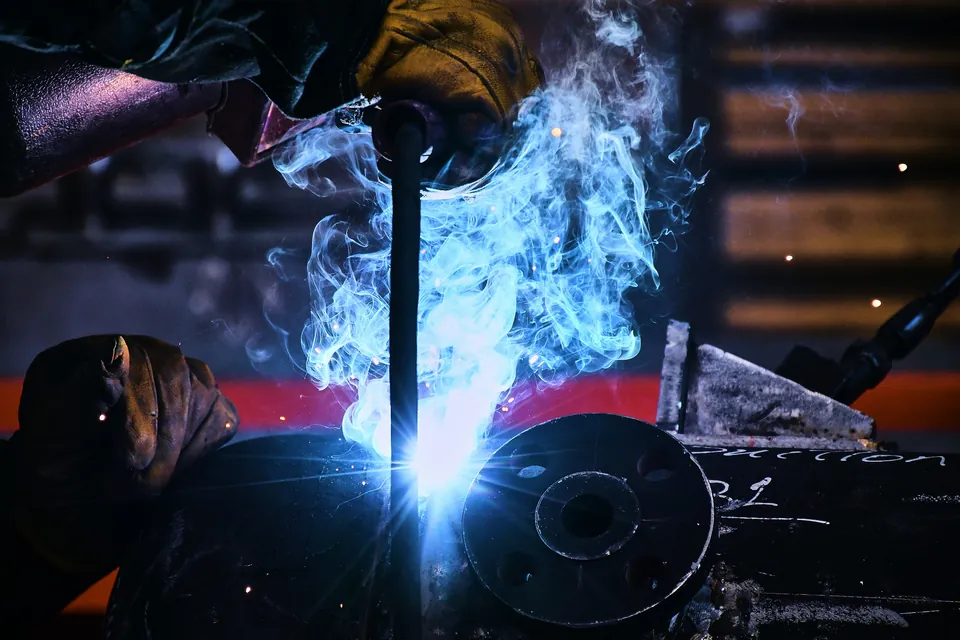
A fabricated assembly needs a joining procedure appropriate to the material and service. Qualification and inspection are documented activities, not conclusions that can be drawn from a welding photograph.
Request: material specification, procedure qualification and inspection plan.
11Joining changes the manufacturing questions.General welding photograph. No vanadium alloy, part identity, welding standard, safety compliance or affiliation is verified. Not instructions for carrying out welding.Atieh Khoshraftar / Unsplash (opens a new tab)
03.2 / Evidence question
Follow function, not pipework
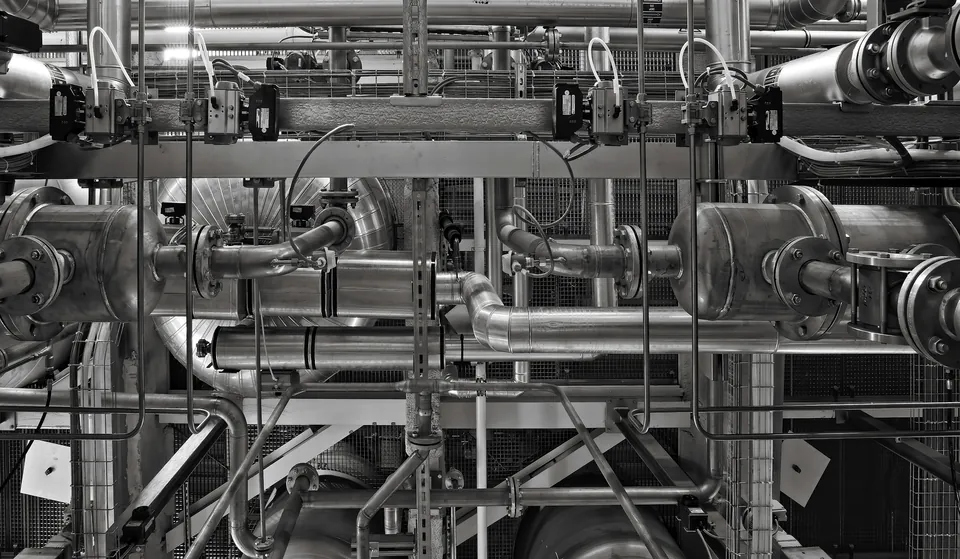
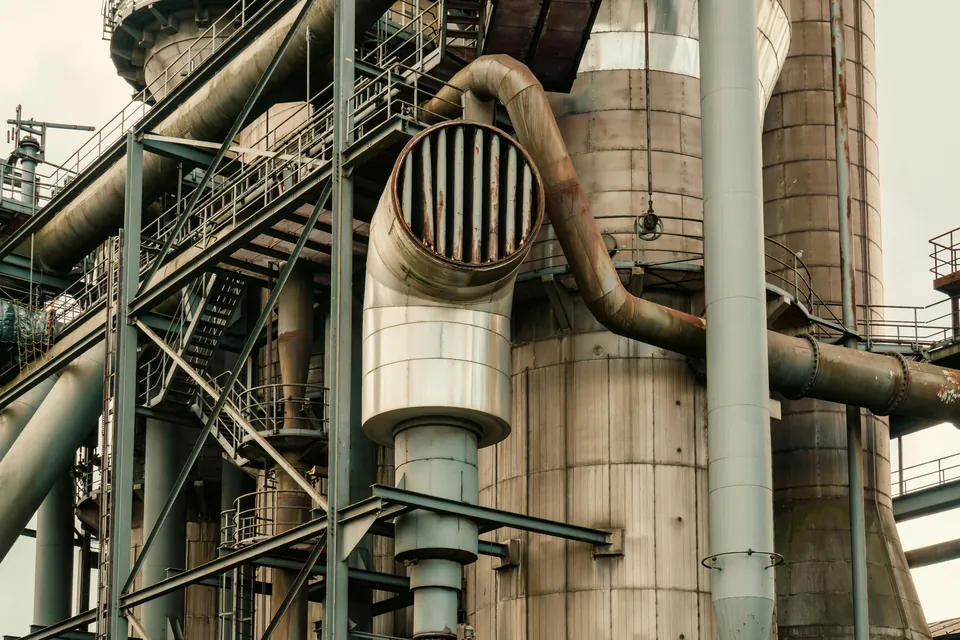
In an all-vanadium flow battery, electrolytes circulate through a cell stack. Generic pipes do not identify the liquid, pressure or purpose of a system. This image is not a battery circuit.
Request: process-flow documentation, compatibility requirements and maintenance access.
12Flow paths matter, but pipework does not identify the chemistry.Generic industrial pipework. This is not a verified vanadium process, battery electrolyte circuit or energy-storage installation. Do not infer fluid, pressure or throughput.Ricardo Gomez Angel / Unsplash (opens a new tab)
03.3 / Evidence question
Precision needs a definition
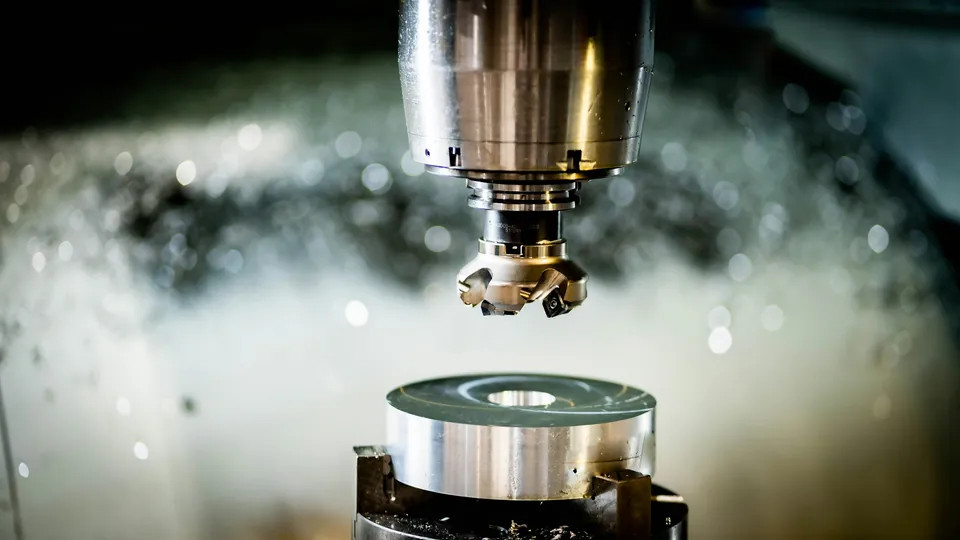
Machining is judged against specified geometry and acceptance criteria. A cutting head and workpiece do not prove an alloy, tolerance, surface finish or production capability.
Request: drawings, tolerances, inspection evidence and scrap-handling requirements.
13Precision begins with the process specification.Illustrative machining equipment. No particular alloy, vanadium content, tolerance, output quality or business relationship is verified.Jelifer Maniago / Unsplash (opens a new tab)
03.4 / Evidence question
Map the system boundary
Large industrial installations bring together many functions. A credible explanation marks what is included, how subsystems connect and which functions remain unverified.
Request: an equipment register, functional diagram and verified operator information.
14Industrial systems connect many distinct functions.General industrial structure. Do not identify as vanadium extraction, electrolyte manufacture, storage technology, current operations or an alliance facility.Jakub Żerdzicki / Unsplash (opens a new tab)
03.5 / Evidence question
A display is not a production line
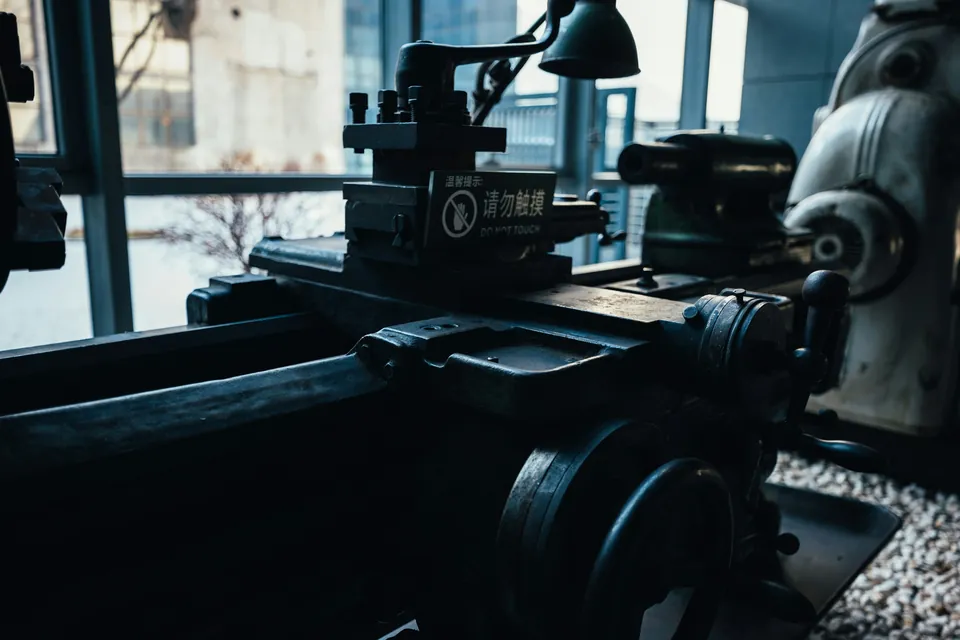
The pictured lathe has a do-not-touch sign. Historical and display equipment can explain engineering ideas, but cannot establish current production access or qualified output.
Request: current equipment status and capability evidence from an actual operator.
15A machine can explain a principle without proving current capability.A do-not-touch sign is visible, suggesting a display context. Do not describe this as current production, accessible equipment or a VanadiumAlliance facility. Preserve the safety notice.LISK OBE / Unsplash (opens a new tab)
Take the question forward
Make the unknowns visible.
A useful brief distinguishes facts, assumptions and evidence that still needs to be gathered. The local worksheet provides a starting structure, not a technical approval.