A method is useful when the question, sample and limits are visible. Dimensions, optical observations and mechanical tests are different kinds of evidence.
01Which property?02Under what conditions?03Against which criteria?
Grounding the discussion
A material claim needs evidence appropriate to the property being claimed. The photographs here illustrate general measurement settings, not vanadium research or certified facilities.
All photographs below are general illustrative contexts. They do not depict verified vanadium materials, flow batteries or alliance projects.
02.1 / Evidence question
Dimensions are one part of a specification
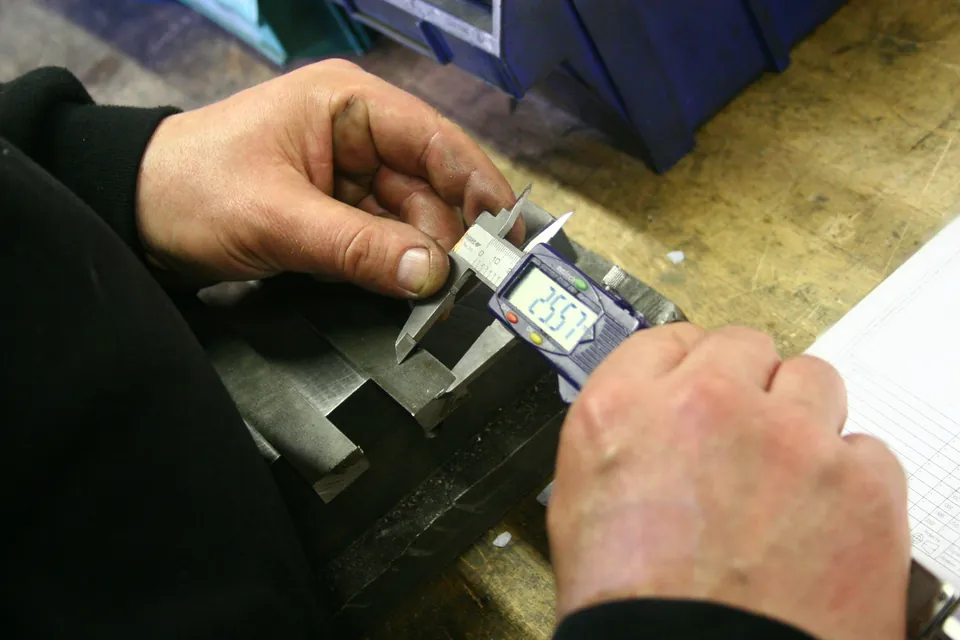
A caliper can support a dimensional check. It does not establish composition, strength or suitability for service. Record the instrument, calibration status and the tolerance the measurement is meant to assess.
Request: dimension, tolerance, measurement method and instrument record.
06Dimensions are one measurement, not a complete qualification.Illustrative dimensional measurement. The pictured reading is not a VanadiumAlliance test result. No alloy identity, operator qualification, calibrated status or endorsed technique is established.Hans Westbeek / Unsplash (opens a new tab)
02.2 / Evidence question
Conditions travel with the result
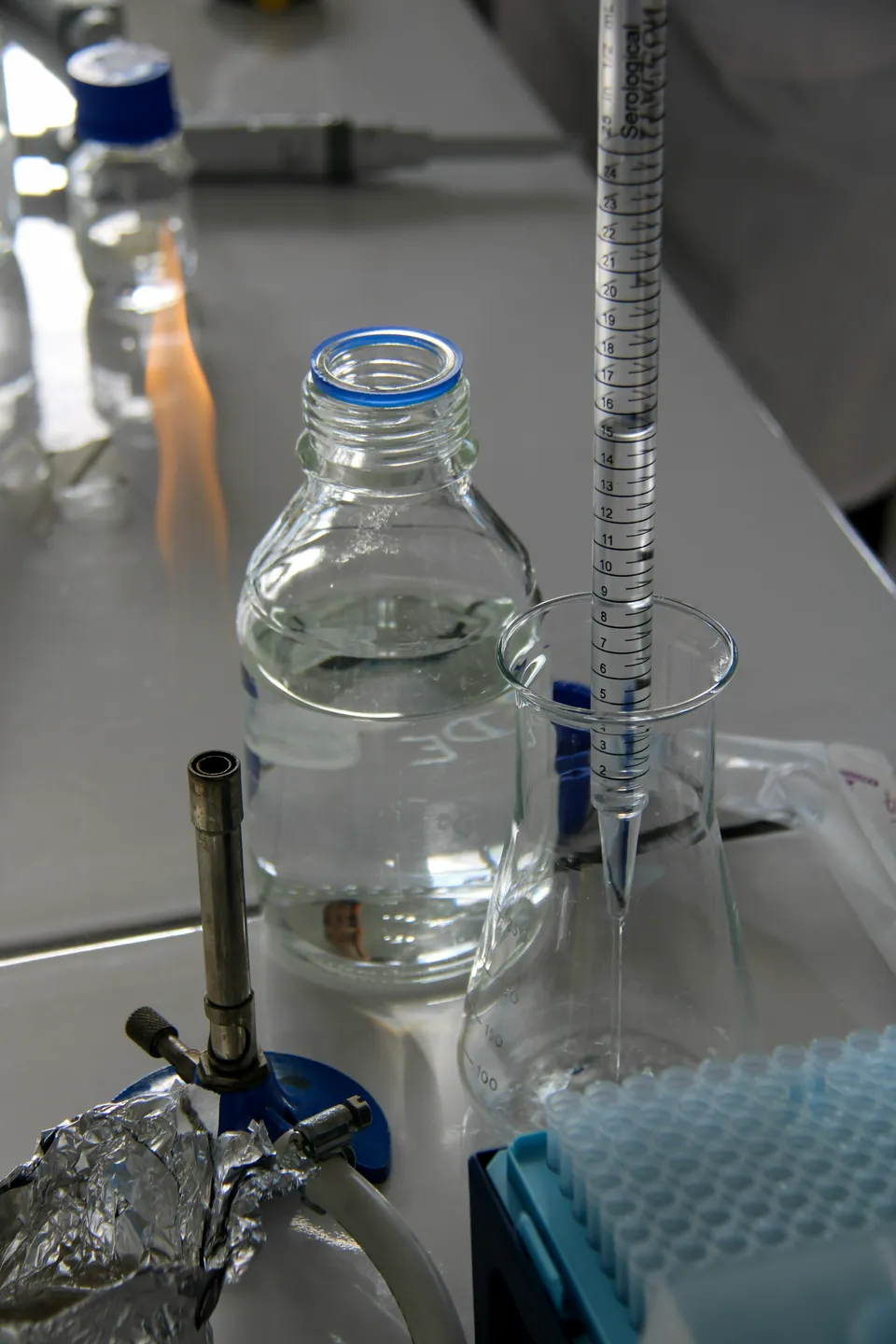
A liquid’s appearance does not identify its chemistry. A useful test record ties the sample to a method and records relevant conditions. These clear liquids are not verified vanadium electrolytes.
Request: sample identity, temperature, procedure and uncertainty.
07An experiment needs recorded conditions and a defined question.General laboratory scene with clear liquids. These are not verified vanadium electrolytes. No chemistry, concentration, safety compliance or test outcome is claimed. Not a procedure to imitate.Nathan Rimoux / Unsplash (opens a new tab)
02.3 / Evidence question
Compare like with like
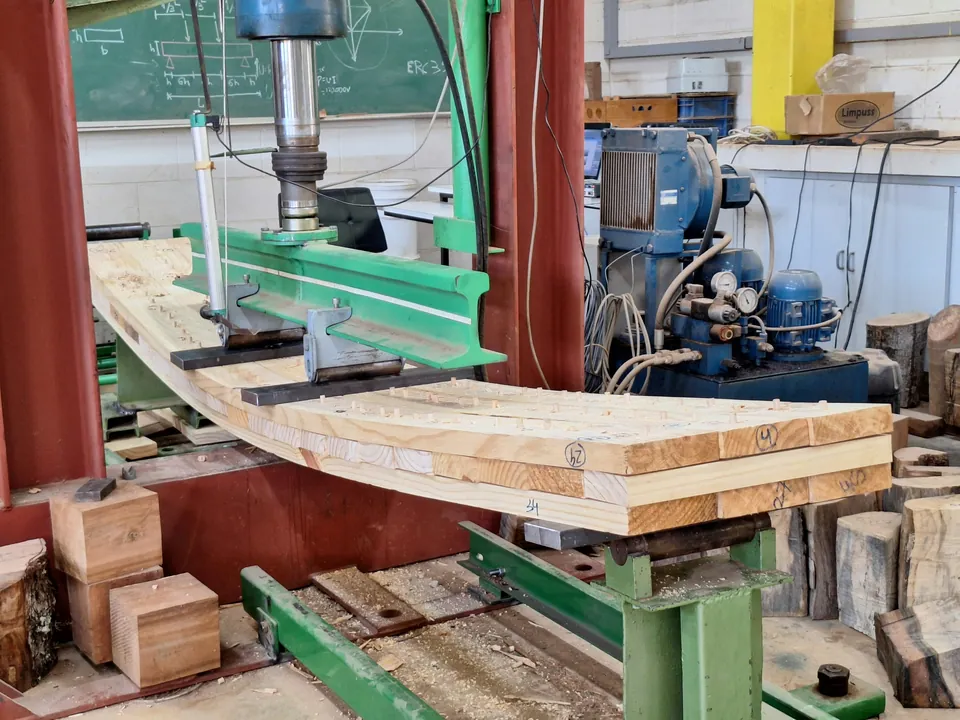
This photograph shows wood beneath a loading fixture. It illustrates why specimen geometry and loading conditions matter; it provides no result for steel or vanadium alloys.
Request: material, specimen geometry, loading regime and failure criteria.
08Material testing makes assumptions visible.The specimen is wood, not steel or a vanadium alloy. Use only in a general testing-method discussion. Do not claim certification, strength, current safe operation or VanadiumAlliance facilities.Renan Guedes / Unsplash (opens a new tab)
02.4 / Evidence question
Observation has a scale
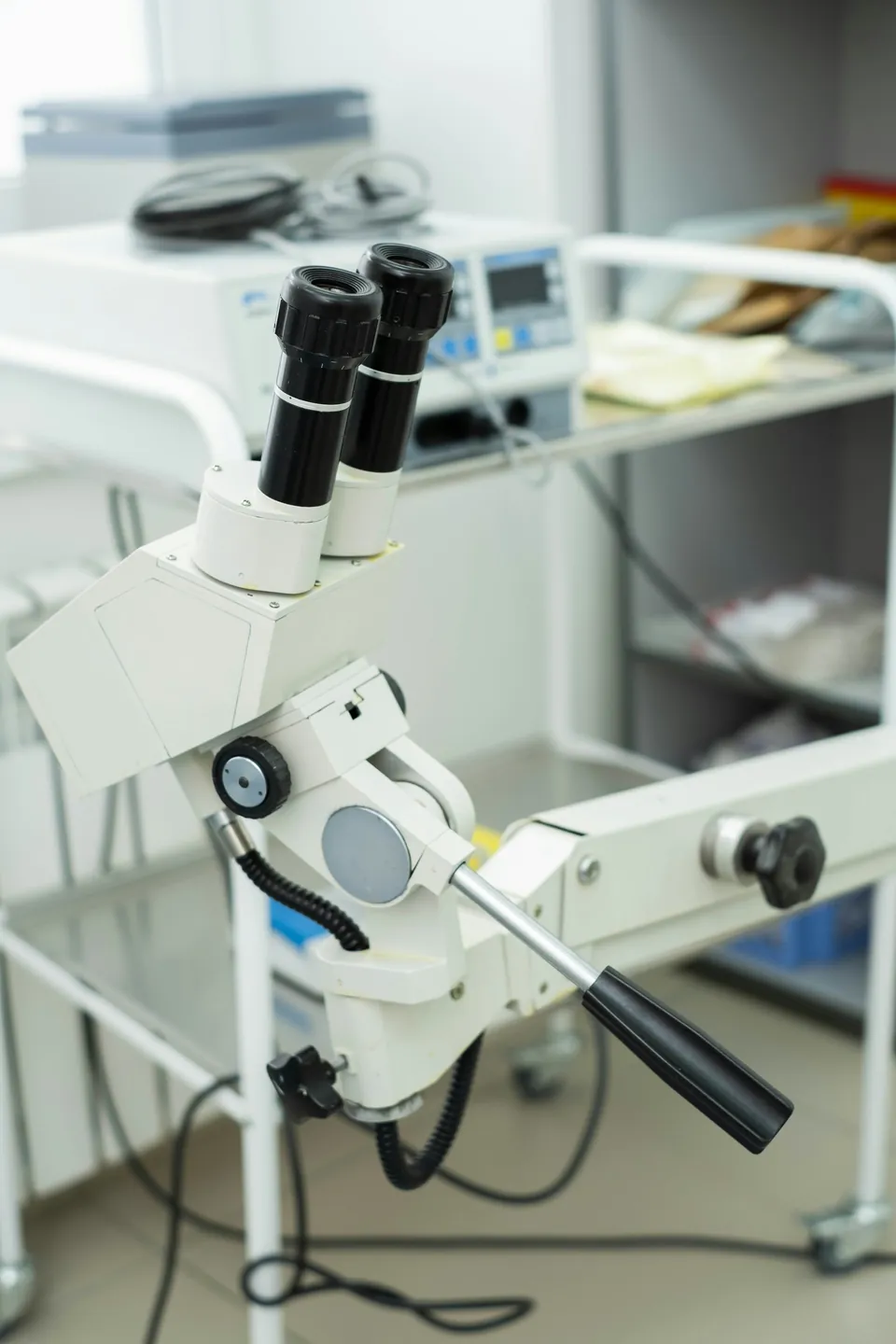
Microscopy can reveal features at a particular scale. A photograph of an instrument does not reveal what sample was examined, the magnification or whether compositional analysis was performed.
Request: sample preparation, instrument settings and what the method cannot resolve.
09The scale of observation changes the question.Generic microscope, not a verified metallurgy instrument or vanadium analysis. No sample, magnification, measurement, diagnosis or research affiliation is established.Elen Sher / Unsplash (opens a new tab)
02.5 / Evidence question
An apparatus is not a validated method
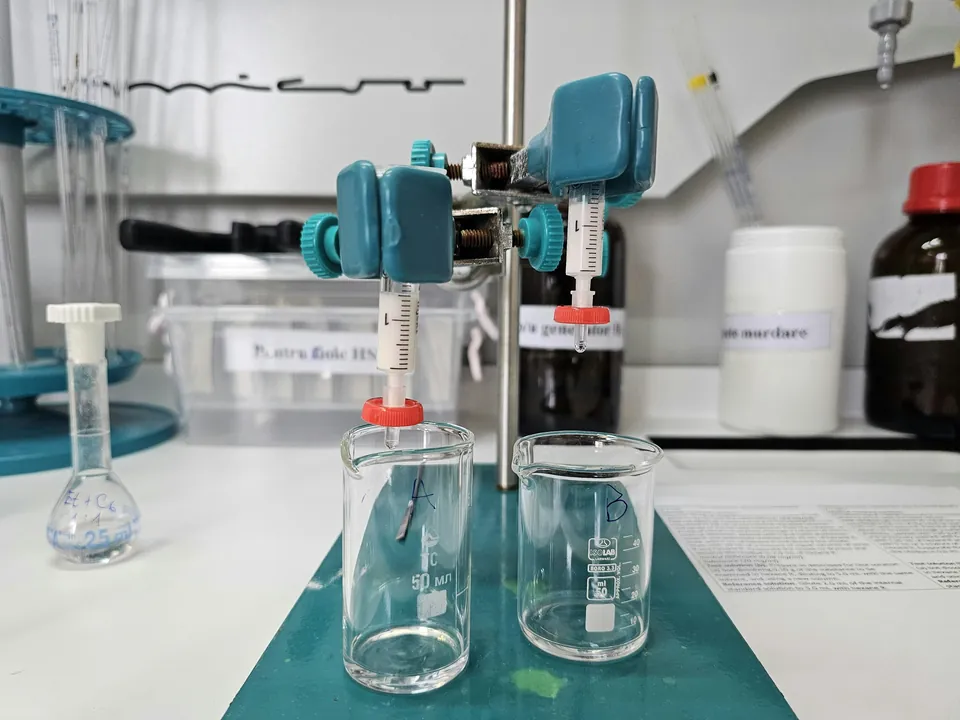
Clamps, syringes and beakers suggest a laboratory setup, but do not establish its purpose or reliability. Distinguish an exploratory experiment from a repeatable method with acceptance criteria.
Request: method validation, repeatability and a complete record.
10Apparatus alone is not evidence of a process.Source tags filtration, but liquid identity and exact method are unverified. Not vanadium electrolyte, a flow-battery circuit or a validated recovery process. Do not use as an operating recipe.Rust Tamov / Unsplash (opens a new tab)
Take the question forward
Make the unknowns visible.
A useful brief distinguishes facts, assumptions and evidence that still needs to be gathered. The local worksheet provides a starting structure, not a technical approval.