Start with the service an energy system needs. Production, demand and the timing of delivery are more useful than a picture of a technology.
01Which service?02How much power?03For how long?
Grounding the discussion
In redox flow batteries, the cell stack largely determines power while electrolyte inventory and tank capacity largely determine stored energy. Actual usable output also depends on system design and operating conditions.
All photographs below are general illustrative contexts. They do not depict verified vanadium materials, flow batteries or alliance projects.
05.1 / Evidence question
Begin with profiles
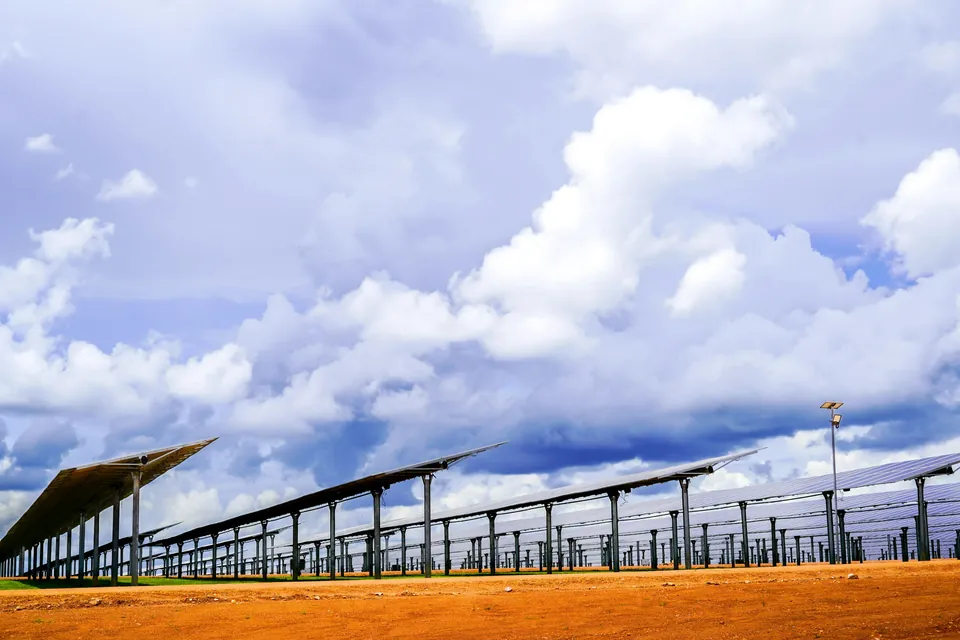
Solar production and electricity demand vary over time. A useful storage study starts with aligned, quality-checked time series and a defined service. This solar photograph does not show a battery installation.
Request: production and demand data with timestamps and measurement boundaries.
21Generation profiles frame the storage question.Source names a solar plant in Zambia, but its stated capacity and operating details are not independently verified here. No battery, vanadium use, collaboration or partnership is shown or implied.Sikwe Scarter / Unsplash (opens a new tab)
05.2 / Evidence question
Compare the whole system
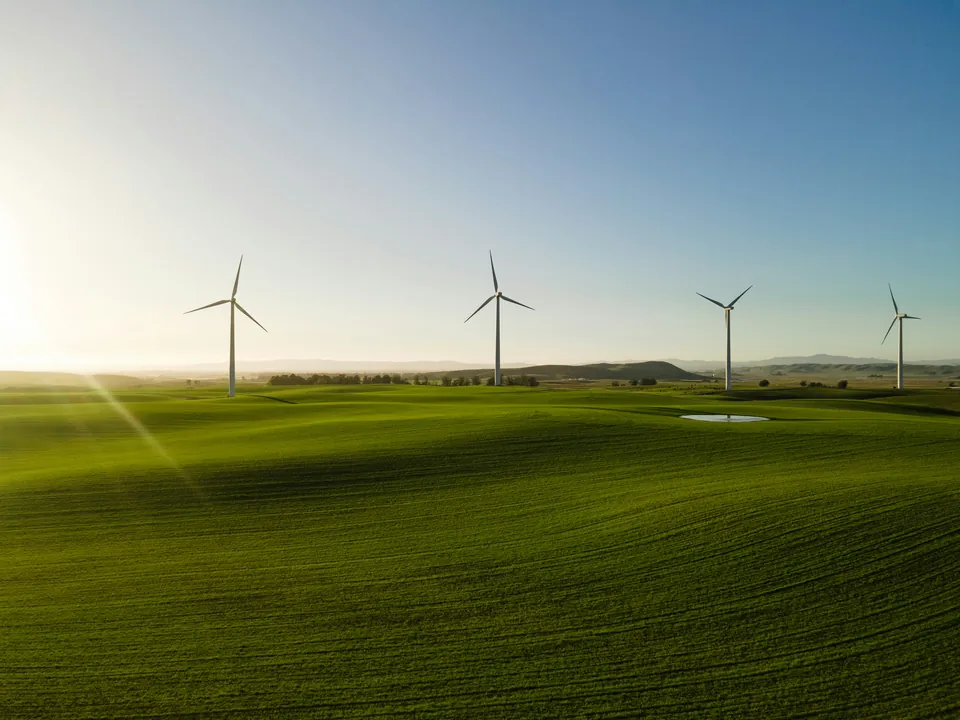
Wind generation, demand and storage need to be considered together. The appropriate comparison depends on the service, operating conditions and constraints, not a general claim that one technology is best.
Request: the service definition and comparable operating assumptions.
22The useful comparison is a system comparison.Illustrative wind landscape. No project identity, operating output, energy yield, storage system or alliance relationship is established.Zac Wolff / Unsplash (opens a new tab)
05.3 / Evidence question
Scale changes the questions
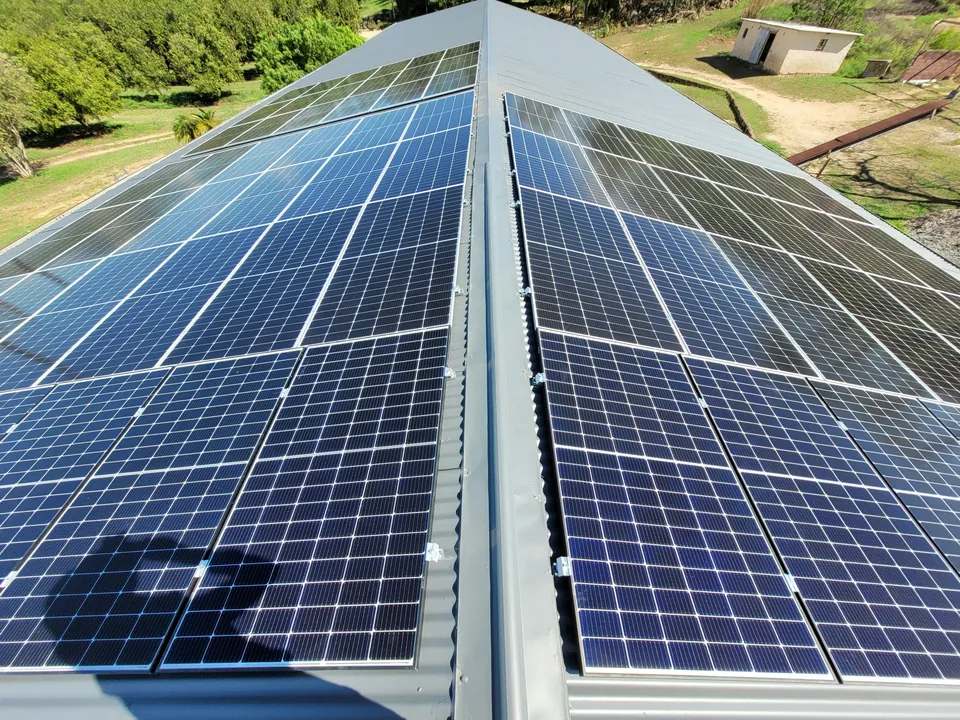
Rooftop generation introduces local-load and connection questions. Do not assume a building’s consumption or an installation’s output from roof area in a photograph.
Request: measured demand, production and site-specific electrical information.
23Local generation changes the scale of the discussion.Generic rooftop installation. No storage system, ownership, power output, installation quality, access permission or electrical safety certification is established. Do not use as an installation guide.Sergio Martins / Unsplash (opens a new tab)
05.4 / Evidence question
Different resources, different constraints
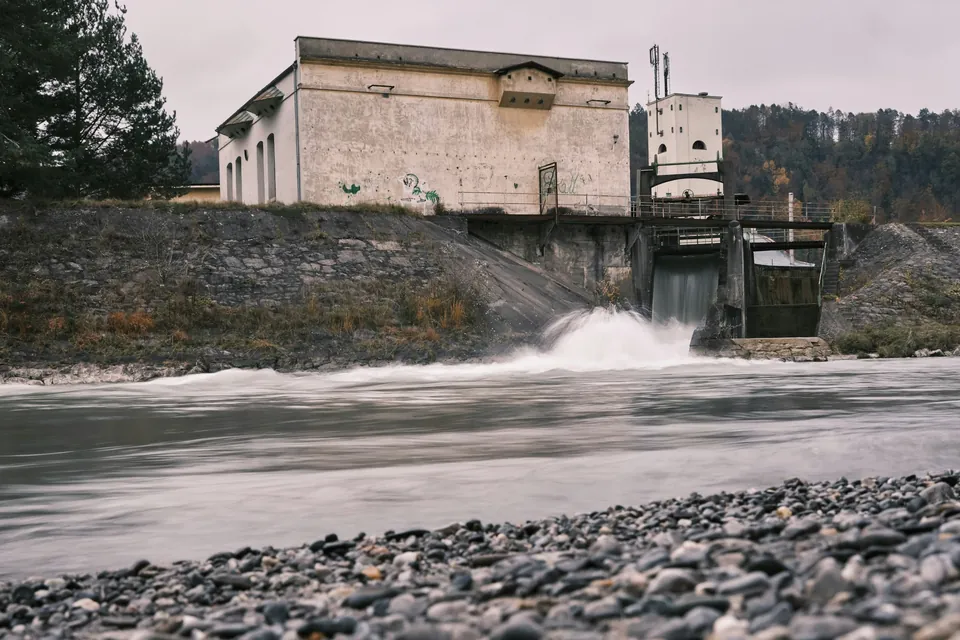
Water conditions, dispatch arrangements and environmental requirements belong in a hydropower assessment. A building and river do not demonstrate current output or available storage.
Request: verified operating conditions and applicable constraints.
24Different generation sources bring different operating questions.Source identifies a hydroelectric plant in Feldkirch, Austria. This does not establish current operation, output, storage capability, affiliation or a vanadium project.Marcus Ganahl / Unsplash (opens a new tab)
05.5 / Evidence question
A moment is not a dataset
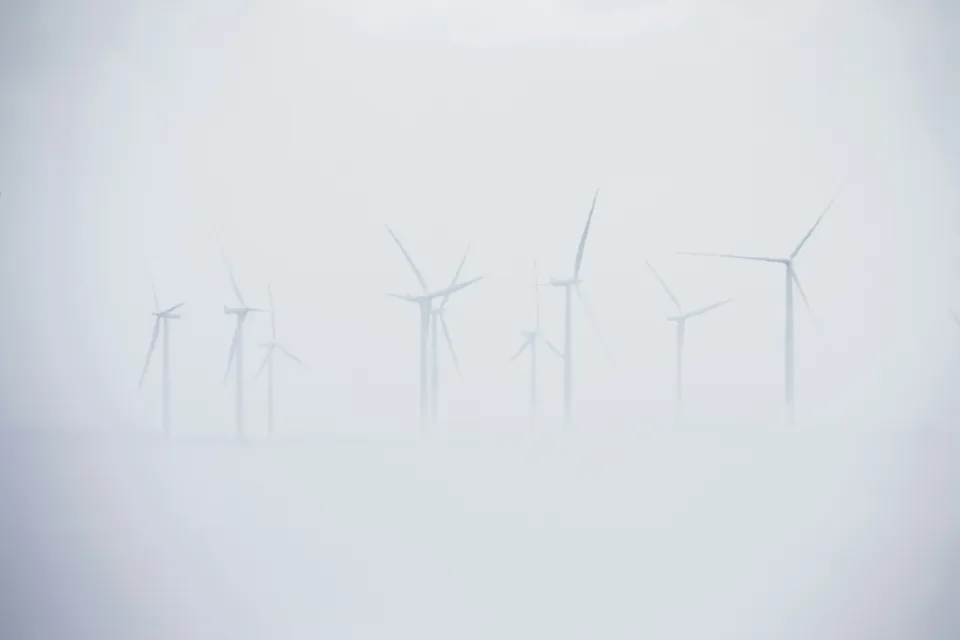
Mist in a wind-farm photograph says nothing reliable about annual generation, downtime or a need for a particular storage technology. Use a suitable data period and document gaps and uncertainty.
Request: time-series coverage, quality controls and uncertainty treatment.
25One photograph cannot describe a year of generation.Illustrative misty wind scene. Mist does not establish turbine output, downtime, climate trends or the need for a particular storage technology.Anthony Aird / Unsplash (opens a new tab)
Take the question forward
Make the unknowns visible.
A useful brief distinguishes facts, assumptions and evidence that still needs to be gathered. The local worksheet provides a starting structure, not a technical approval.